
Kapitał zapasowy a rezerwowy — czym się różnią i na co można je przeznaczyć?

Table of contents
Key information:
- Supplementary capital and reserve capital are components of a company's equity, but they serve different functions.
- Reserve capital is primarily used to protect the company in the event of losses and provides greater flexibility in the use of funds.
- A reserve fund is usually established for a specific purpose, such as the company's growth, future liabilities, or specific risks.
- The creation of a supplementary capital or reserve fund is not always mandatory, but may be required by law or by a decision of the shareholders.
- The company’s competent bodies decide on the allocation of profits, the use of capital, and any distribution of funds in accordance with formal procedures.
Kapitał zapasowy i kapitał rezerwowy to pojęcia, które często pojawiają się przy podziale zysku, planowaniu dywidendy, analizie bilansu lub zabezpieczaniu spółki przed stratą. Oba należą do kapitałów własnych, ale pełnią inną funkcję i nie zawsze można wykorzystywać je w ten sam sposób.
Najprościej mówiąc: kapitał zapasowy ma zwykle charakter zabezpieczający, a kapitał rezerwowy jest tworzony na konkretny cel. Różnica ta ma znaczenie nie tylko księgowe, ale też biznesowe — wpływa na sposób zarządzania zyskiem, stabilność firmy i decyzje wspólników.
W artykule wyjaśniamy, czym różni się kapitał zapasowy od rezerwowego, jak działają w spółce z o.o., gdzie są widoczne w bilansie oraz kiedy mogą mieć znaczenie przy wypłacie dywidendy.
Prowadzisz spółkę i chcesz mieć finanse pod kontrolą?
Skorzystaj z pełnej księgowości dla spółek — od bieżącej obsługi księgowej po wsparcie przy rozliczaniu zysku, kapitale zapasowym, kapitale rezerwowym i dywidendzie. Jeśli potrzebujesz praktycznego wsparcia, sprawdź rejestracja spółki z profesjonalnym wsparciem.
Sprawdź obsługę księgową spółek →Supplementary versus reserve capital - the role in a company
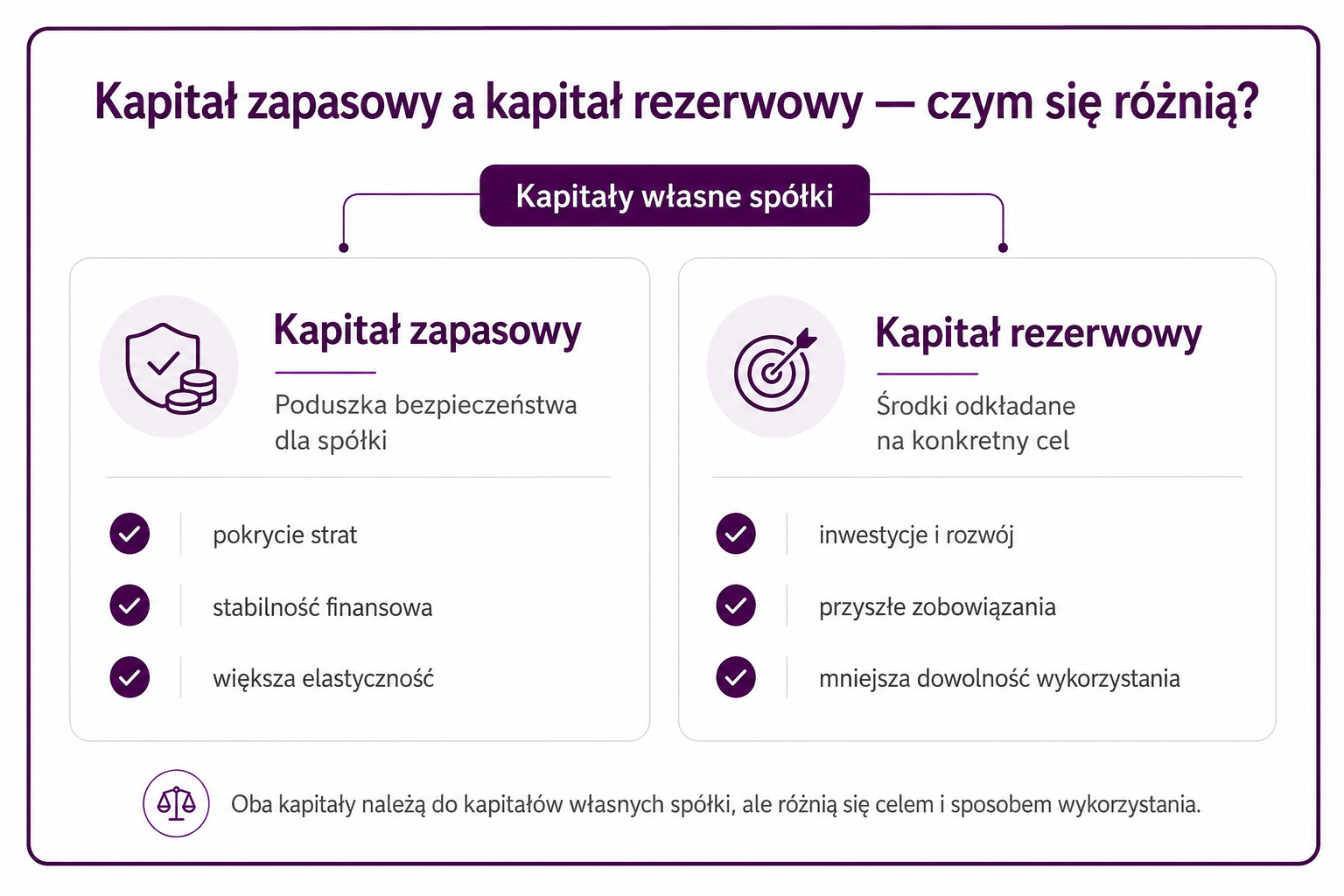
Główna różnica między kapitałem zapasowym a rezerwowym dotyczy celu, dla którego środki są gromadzone.
Kapitał zapasowy ma najczęściej wzmacniać bezpieczeństwo finansowe spółki. Może pomóc w pokryciu strat, utrzymaniu stabilności kapitałowej albo zatrzymaniu części zysku w firmie.
Kapitał rezerwowy jest bardziej celowy. Tworzy się go wtedy, gdy spółka chce odłożyć środki na konkretny projekt, inwestycję, przyszłe zobowiązanie lub inne znane ryzyko.
W praktyce kapitał zapasowy odpowiada na pytanie: jak zabezpieczyć firmę?
Kapitał rezerwowy odpowiada na pytanie: na jaki konkretny cel odkładamy środki?
What is the capital reserve?
Kapitał zapasowy to część kapitału własnego, którą spółka może przeznaczyć przede wszystkim na pokrycie strat lub wzmocnienie swojej sytuacji finansowej. W praktyce pełni funkcję „poduszki bezpieczeństwa” dla firmy.
Kapitał zapasowy może powstać m.in. z zysku netto, nadwyżki emisyjnej lub innych źródeł przewidzianych w przepisach, umowie spółki albo statucie.
Dla właścicieli i zarządu spółki jest to ważny element planowania finansowego. Pokazuje, czy firma zostawia część środków w biznesie, zamiast przeznaczać cały zysk do wypłaty.
Na co można przeznaczyć kapitał zapasowy?
Kapitał zapasowy najczęściej służy do zabezpieczenia firmy przed skutkami straty lub pogorszenia sytuacji finansowej. Może też wzmacniać kapitały własne i poprawiać wiarygodność spółki wobec banków, inwestorów lub kontrahentów.
Przykładowe zastosowania kapitału zapasowego:
- pokrycie straty z działalności,
- zwiększenie bezpieczeństwa finansowego spółki,
- zatrzymanie części zysku w firmie,
- przygotowanie spółki na okres większych kosztów,
- wzmocnienie kapitałów własnych w bilansie.
Nie należy jednak traktować kapitału zapasowego jak zwykłych środków do dowolnego wydania. Jego wykorzystanie powinno być zgodne z przepisami, dokumentami spółki i decyzją właściwego organu.
Czym jest kapitał rezerwowy?
Kapitał rezerwowy to środki wydzielone w kapitale własnym na określony cel. Może nim być inwestycja, rozwój spółki, zabezpieczenie przyszłych zobowiązań albo przygotowanie firmy na konkretne ryzyko.
W odróżnieniu od kapitału zapasowego kapitał rezerwowy zwykle ma bardziej precyzyjne przeznaczenie. Dlatego przed jego wykorzystaniem trzeba sprawdzić, w jakim celu został utworzony i czy można zmienić ten cel.
Kapitał rezerwowy może powstać m.in. z zysku netto, który nie został wypłacony w formie dywidendy. W niektórych sytuacjach może być też związany z dopłatami wspólników lub innymi decyzjami właścicielskimi.
Na co można przeznaczyć kapitał rezerwowy?
Kapitał rezerwowy przeznacza się przede wszystkim na cel wskazany przy jego utworzeniu. Jeśli wspólnicy zdecydowali, że środki mają zabezpieczać konkretną inwestycję lub przyszłe zobowiązanie, wykorzystanie kapitału powinno być z tym zgodne.
Przykładowe zastosowania kapitału rezerwowego:
- finansowanie rozwoju spółki,
- przygotowanie środków na inwestycję,
- zabezpieczenie przyszłych zobowiązań,
- pokrycie określonych ryzyk,
- zatrzymanie zysku w firmie,
- realizacja celu wskazanego w uchwale, umowie spółki lub statucie.
Kluczowe jest więc nie tylko to, ile środków znajduje się na kapitale rezerwowym, ale też dlaczego zostały tam przeniesione.
Zastanawiasz się, jakie skutki podatkowe ma podział zysku?
Przed wypłatą dywidendy lub przeznaczeniem zysku na kapitał zapasowy albo rezerwowy warto sprawdzić konsekwencje podatkowe i wybrać najbezpieczniejsze rozwiązanie dla spółki. Szerzej omawiamy praktyczne zasady prowadzenia spółki z o.o. w osobnym poradniku.
Skonsultuj kwestie podatkowe →Kapitał zapasowy i rezerwowy w spółce z o.o.
W spółce z ograniczoną odpowiedzialnością kapitał zapasowy i kapitał rezerwowy mogą wspierać zarządzanie zyskiem oraz bezpieczeństwem finansowym firmy. Spółka z o.o. musi mieć kapitał zakładowy, natomiast zasady tworzenia dodatkowych kapitałów zależą od przepisów, umowy spółki i decyzji wspólników.
W praktyce wspólnicy mogą zdecydować, że część zysku pozostanie w firmie. W zależności od celu środki mogą zasilić kapitał zapasowy albo rezerwowy.
Dla spółki z o.o. kapitał zapasowy będzie przydatny przede wszystkim wtedy, gdy firma chce zabezpieczyć się przed stratą. Kapitał rezerwowy sprawdzi się natomiast przy planowaniu konkretnego celu, np. inwestycji, rozwoju lub większego zobowiązania.
Przed podjęciem uchwały warto sprawdzić:
- co przewiduje umowa spółki,
- czy spółka osiągnęła zysk netto,
- czy istnieją niepokryte straty,
- jaki cel mają mieć zatrzymane środki,
- czy planowana decyzja wymaga uchwały wspólników,
- jak operacja zostanie ujęta księgowo.
Kapitał zapasowy w spółce akcyjnej
W spółce akcyjnej kapitał zapasowy ma szczególne znaczenie, ponieważ przepisy przewidują obowiązek jego tworzenia na pokrycie straty. Do kapitału zapasowego przelewa się część zysku za dany rok obrotowy, dopóki kapitał ten nie osiągnie wymaganego poziomu.
W tym przypadku kapitał zapasowy pełni funkcję ustawowego zabezpieczenia. Ma wzmacniać stabilność spółki i chronić ją przed skutkami strat.
W innych typach spółek zasady tworzenia kapitału zapasowego mogą wyglądać inaczej. Zależą przede wszystkim od formy prawnej, dokumentów spółki oraz decyzji wspólników.
Zysk na kapitał zapasowy czy rezerwowy?
Nie zawsze najlepszym rozwiązaniem jest wypłata całego zysku wspólnikom. Czasami korzystniejsze dla firmy jest pozostawienie części środków w spółce — na kapitale zapasowym albo rezerwowym.
Kapitał zapasowy warto rozważyć, gdy celem jest ogólne wzmocnienie bezpieczeństwa finansowego. Kapitał rezerwowy będzie lepszy wtedy, gdy środki mają zostać przeznaczone na konkretny cel.
Przed podjęciem decyzji warto odpowiedzieć na kilka pytań:
- Czy spółka osiągnęła zysk netto?
- Czy firma ma niepokryte straty?
- Czy planowana jest wypłata dywidendy?
- Czy spółka potrzebuje środków na konkretną inwestycję?
- Czy celem jest zabezpieczenie ogólne, czy konkretny projekt?
- Czy umowa spółki lub statut przewidują szczególne zasady podziału zysku?
- Jak decyzja wpłynie na bilans i kapitały własne?
To nie jest wyłącznie decyzja księgowa. Sposób przeznaczenia zysku wpływa na bezpieczeństwo firmy, jej plany rozwojowe i możliwości wypłaty środków wspólnikom.
Nie wiesz, czy zysk wypłacić, czy zostawić w firmie?
Decyzja o przeznaczeniu zysku wpływa na bezpieczeństwo, rozwój i płynność spółki — skorzystaj z doradztwa biznesowego, aby dobrać rozwiązanie do aktualnej sytuacji firmy.
Porozmawiaj z doradcą →Kapitał zapasowy i rezerwowy w bilansie
Kapitał zapasowy i kapitał rezerwowy są wykazywane w bilansie po stronie pasywów, w części dotyczącej kapitałów własnych. Pokazują, jaka część środków została zatrzymana w firmie i jaką funkcję pełni w strukturze finansowania.
Dla osób analizujących spółkę sama obecność tych kapitałów nie wystarczy. Ważne jest również ich źródło, wysokość i przeznaczenie. Inaczej należy interpretować kapitał zapasowy utworzony na pokrycie straty, a inaczej kapitał rezerwowy przeznaczony na planowaną inwestycję.
Czy można wypłacić dywidendę z kapitału zapasowego lub rezerwowego?
Dywidenda jest co do zasady związana z zyskiem spółki i decyzją właściwego organu. W określonych sytuacjach przy ustalaniu kwoty do podziału można uwzględnić także środki przeniesione z kapitału zapasowego lub rezerwowego, jeśli zostały utworzone z zysku i mogą być przeznaczone do podziału.
Nie oznacza to jednak, że każdą kwotę zgromadzoną na tych kapitałach można swobodnie wypłacić wspólnikom albo akcjonariuszom.
Przed decyzją trzeba sprawdzić:
- z jakiego źródła powstał kapitał,
- czy został utworzony z zysku,
- czy spółka ma niepokryte straty,
- czy umowa spółki lub statut przewidują ograniczenia,
- czy potrzebna jest uchwała,
- czy wypłata będzie zgodna z przepisami i zasadami księgowymi.
Przy tego typu decyzjach warto skonsultować się z księgowym lub prawnikiem. Błędna wypłata dywidendy może mieć konsekwencje formalne i finansowe.
Kapitał zapasowy a rezerwowy — przykład praktyczny
Spółka z o.o. osiągnęła zysk netto i wspólnicy zastanawiają się, jak go rozdysponować. Mogą wypłacić dywidendę, zostawić środki na kapitale zapasowym albo utworzyć kapitał rezerwowy.
Jeśli celem jest zabezpieczenie firmy przed słabszym okresem lub przyszłą stratą, uzasadnione może być przeznaczenie części zysku na kapitał zapasowy.
Jeśli spółka planuje konkretną inwestycję, zakup sprzętu, rozwój zespołu albo ekspansję, bardziej praktyczne może być utworzenie kapitału rezerwowego.
Ten przykład pokazuje, że wybór między kapitałem zapasowym a rezerwowym nie jest tylko formalnością. To decyzja o tym, jak firma zarządza zyskiem, ryzykiem i planami rozwoju.
Prowadzisz spółkę w Warszawie? Zadbaj też o koszty i formalności
Decyzje dotyczące kapitału, zysku i dywidendy są częścią szerszego zarządzania firmą. Przedsiębiorcy analizują nie tylko finanse, ale też koszty administracyjne, adres rejestrowy, obsługę korespondencji i wygodę prowadzenia spraw firmowych.
Jeśli prowadzisz spółkę w Warszawie i chcesz ograniczyć stałe koszty, możesz rozważyć Wirtualne Biuro Biznes Spot. To rozwiązanie pozwala korzystać z adresu firmowego bez wynajmu tradycyjnej powierzchni biurowej.
Profesjonalny adres w Warszawie może wspierać wizerunek spółki, a obsługa korespondencji ułatwia codzienne formalności — szczególnie wtedy, gdy firma działa zdalnie, hybrydowo albo nie potrzebuje stałego biura.
Prowadzisz spółkę w Warszawie i chcesz ograniczyć koszty?
Wirtualne biuro pozwala korzystać z adresu firmowego w Warszawie, obsługi korespondencji i dodatkowego wsparcia administracyjnego bez wynajmu tradycyjnego biura.
Check out the virtual office →Podsumowanie
Kapitał zapasowy i kapitał rezerwowy są częścią kapitałów własnych spółki, ale nie należy traktować ich zamiennie. Kapitał zapasowy pełni przede wszystkim funkcję zabezpieczającą, a kapitał rezerwowy służy realizacji konkretnego celu.
Dla właścicieli spółek najważniejsze jest prawidłowe określenie, po co środki mają pozostać w firmie. Inne zasady mogą dotyczyć pokrycia straty, inne inwestycji, a jeszcze inne wypłaty dywidendy.
Przed podjęciem decyzji o przeznaczeniu zysku warto sprawdzić umowę spółki, aktualną sytuację finansową i skutki księgowe. W wielu przypadkach pomocne będzie wsparcie księgowe lub doradztwo biznesowe.


